TOTAL VOLUME:
$150.1b
24H VOL:
$143,200,089
24H TRANSACTIONS:
2,859,322,643
OPEN INTEREST:
$1,735,575,990
484,453
Markets across
35,831
events
MATCHED EVENTS:
3,362
PLATFORM COVERAGE:
5
Polymarket:
38%
VS.
Kalshi:
62%
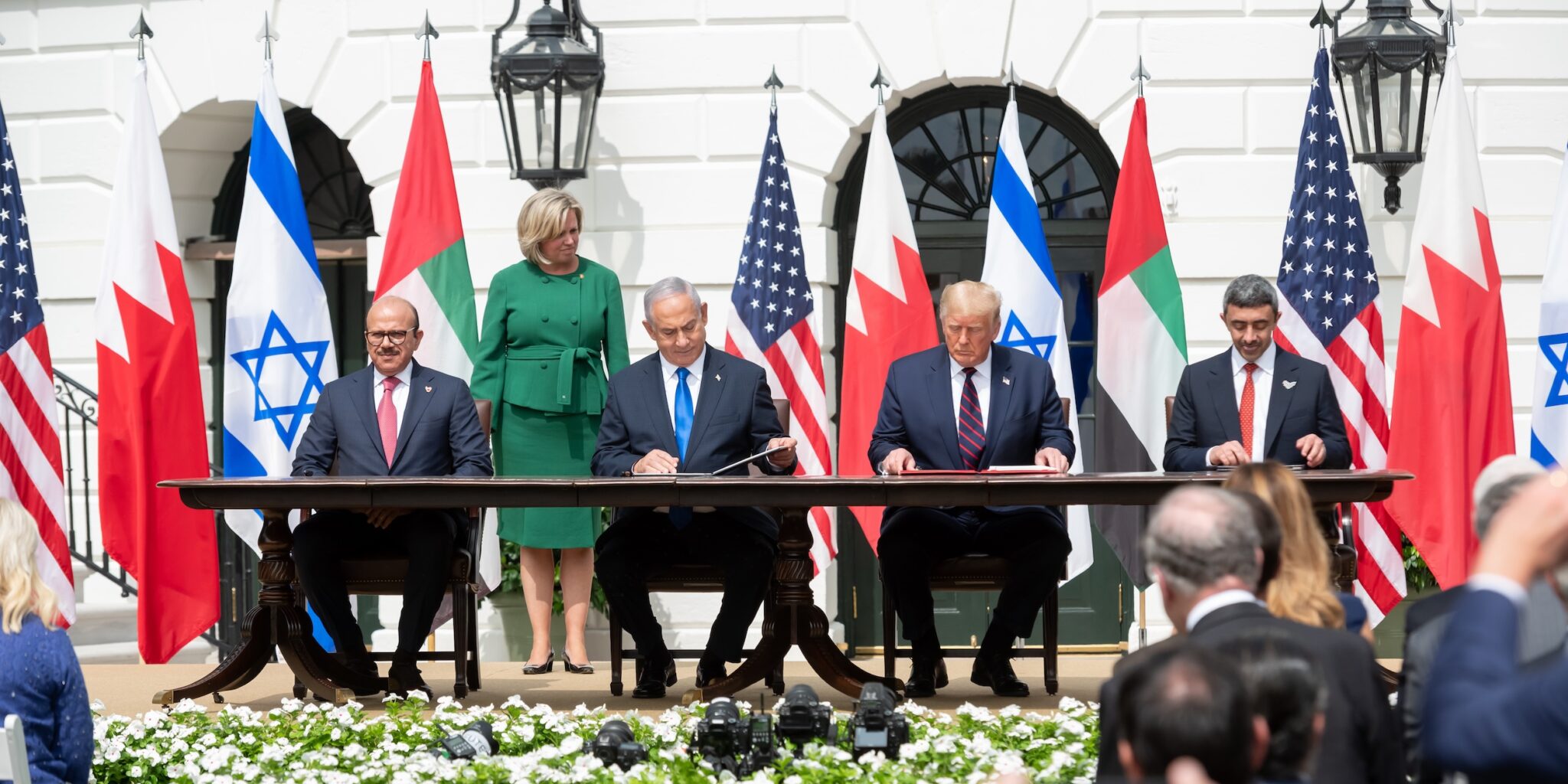
Will a new country join the Abraham Accords before 2027?
- Polymarket
Will a new country join the Abraham Accords before 2027? - Polymarket
1W
News
Positive
Negative
Neutral
Hover marker for details
Vol.
·
Resolves Dec 31, 2026
Latest in World

Will a new country join the Abraham Accords before 2027?
$

Will a new country join the Abraham Accords before 2027?
Description
This market will resolve to "Yes" if any country not already a part of the Abraham Accords formally signs a normalization agreement with Israel under the framework of the Abraham Accords by December 31, 2026 11:59 PM ET. Otherwise, this market will resolve to "No". A formal signing refers to an official agreement between Israel and another country that is publicly acknowledged by both governments and clearly attributed to the Abraham Accords or their continuation. Countries already part of the Abraham Accords as of June 26, 2025—including the United Arab Emirates, Bahrain, Morocco, and Sudan—will not count. The resolution source will be official government statements, however a consensus for credible reporting may also be used.
Polymarket
This market will resolve to "Yes" if any country not already a part of the Abraham Accords formally signs a normalization agreement with Israel under the framework of the Abraham Accords by December 31, 2026 11:59 PM ET. Otherwise, this market will resolve to "No". A formal signing refers to an official agreement between Israel and another country that is publicly acknowledged by both governments and clearly attributed to the Abraham Accords or their continuation. Countries already part of the Abraham Accords as of June 26, 2025—including the United Arab Emirates, Bahrain, Morocco, and Sudan—will not count. The resolution source will be official government statements, however a consensus for credible reporting may also be used.
Frequently asked questions
Currently, the prevailing sentiment in this market suggests a relatively low probability of a new country joining the Abraham Accords before Jan 1, 2027. This contrasts with some analyst forecasts, which vary widely depending on geopolitical assessments and regional stability predictions. While some analysts believe further normalization is likely, others remain skeptical due to ongoing conflicts and political complexities. It’s important to note that prediction market odds reflect the collective wisdom of traders, while analyst forecasts represent individual opinions, and this market offers a different perspective on the likelihood of this event.
On Polymarket, this market is priced through a continuous auction mechanism, where traders buy and sell shares representing their belief about the outcome. The price of a share directly reflects the probability of a new country joining the Abraham Accords before Jan 1, 2027. As more traders participate and new information emerges, the price adjusts accordingly. On Polymarket, prices reflect that venue's order book, liquidity, and how traders price the outcome right now. The current implied probability, as reflected by the share price, is 8.1%, and the volume traded indicates the level of interest in this potential geopolitical development.
This market resolves around Jan 1, 2027, with the outcome confirmed once the event is verifiable from credible public reporting. Specifically, the resolution will depend on whether a sovereign nation formally joins the Abraham Accords – a joint declaration of normalized relations with Israel – before the specified date. The addition must be officially recognized by the involved parties and reported by reputable news sources. The market will then be settled based on this verified information, reflecting whether a new country has indeed joined the Accords.
Several signals or events could significantly impact this market. A breakthrough in negotiations between Israel and a potential new partner, such as Saudi Arabia or Oman, would likely cause the odds to increase. Conversely, escalating regional tensions or a shift in political leadership within a key country could decrease the probability. Major diplomatic initiatives, announcements of high-level meetings, or changes in international mediation efforts would also be closely watched by traders. Any developments affecting the broader geopolitical landscape in the Middle East could influence trading activity in this market before Jan 1, 2027.

%20scale(0.82)%20translate(-12.5%20-12.5)'%3e%3cpath%20fill='%23000'%20fill-rule='evenodd'%20d='M9.619%2012.69h12.995a1.382%201.382%200%200%200%200-2.76h-3.932l5.298-5.405.032-.032L22.08%202.56h-5.255V1.38c0-.76-.619-1.38-1.38-1.38H9.81c-.76%200-1.38.62-1.38%201.38V11.5c0%20.657.534%201.19%201.19%201.19m12.995-2.186h-5.3l5.89-6.01-1.139-1.139-5.813%205.933V1.38a.806.806%200%200%200-.805-.806.806.806%200%200%200-.805.806v9.545c0%20.656.533%201.19%201.189%201.19h6.783a.806.806%200%200%200%200-1.612'%20clip-rule='evenodd'/%3e%3cpath%20fill='%23000'%20fill-rule='evenodd'%20d='M14.393%2011.31H1.398a1.382%201.382%200%200%200%200%202.76H5.33L.032%2019.476%200%2019.507l1.931%201.933h5.255v1.18c0%20.76.619%201.38%201.379%201.38h5.638c.76%200%201.38-.62%201.38-1.38V12.5c0-.657-.534-1.19-1.19-1.19m.293%2011.31a.8.8%200%200%201-.788.805.797.797%200%200%201-.787-.805v-7.904l-5.69%205.928-1.113-1.139%205.764-6.005H6.884a.797.797%200%200%201-.787-.806c0-.444.353-.806.787-.806h6.638c.642%200%201.164.534%201.164%201.19z'%20clip-rule='evenodd'/%3e%3c/g%3e%3c/svg%3e)