TOTAL VOLUME:
$114.4b
24H VOL:
$91,248,924
24H TRANSACTIONS:
1,362,287,844
OPEN INTEREST:
$1,163,520,955
334,440
Markets across
33,346
events
MATCHED EVENTS:
4,559
PLATFORM COVERAGE:
5
Polymarket:
42%
VS.
Kalshi:
58%

Will Trump create a tariff dividend by December 31, 2026?
- Polymarket
Will Trump create a tariff dividend by December 31, 2026? - Polymarket
1W
News
Positive
Negative
Neutral
Hover marker for details
Vol.
·
Resolves Jan 1, 2027
Latest in Politics






Will Trump create a tariff dividend by December 31, 2026?
$

Will Trump create a tariff dividend by December 31, 2026?
Intro
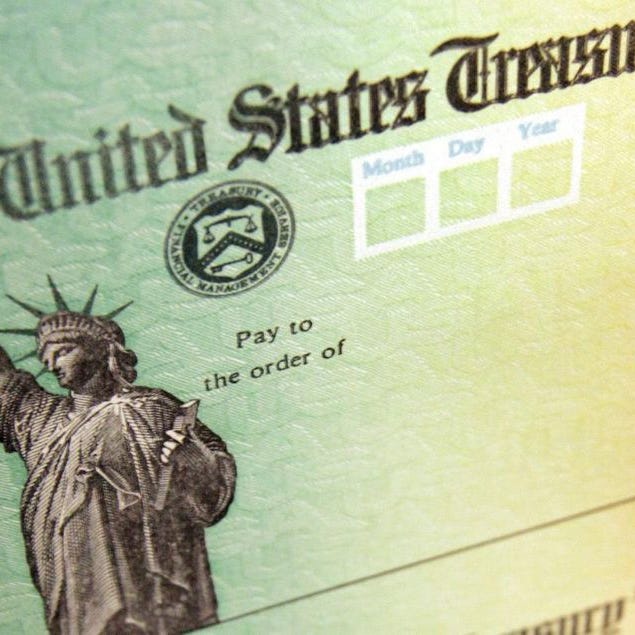
This market tracks whether the Trump Administration will distribute direct payments to Americans funded by tariff revenue by the end of 2026. Across Kalshi and Polymarket, the aggregated consensus shows a 22.0% probability that at least one million Americans will receive payments of at least $1,000 directly attributable to tariff revenue, with a 7.3% probability assigned to the alternative framing of the same outcome. Resolution hinges on whether such payments are reported by the Source Agencies before August 1, 2026, making the early-August reporting deadline the critical checkpoint for market settlement.
PredictionHero - Resolution Divergence Alerts (RDA)
Divergence Detected
Issue: Kalshi imposes strict quantitative thresholds (1 million recipients, $1,000 minimum per payment) with hard deadline checkpoints, while Polymarket requires only formal policy creation with minimal distribution requirements and no recipient or payment minimums.Hero tip: Polymarket YES is a lower bar than Kalshi YES. If Trump signs a tariff dividend executive order but only distributes to 500,000 people or in amounts under $1,000, Polymarket resolves YES but Kalshi resolves NO. Monitor both the formal announcement AND the actual distribution metrics separately.Critical divergence points:
- Polymarket: Resolves YES if Trump Administration formally creates a tariff dividend (via legislation or executive action) by Dec 31, 2026, 11:59 PM ET. Requires only that payments of any amount be distributed to any segment of US taxpayers and clearly attributed to tariff revenue. No minimum recipient count or payment threshold. Key quote: 'A qualifying payment of any amount distributed to any segment of individual US taxpayers will qualify.'
- Kalshi: Resolves YES only if at least 1 million Americans receive payments of at least $1,000 each, directly attributable to tariff revenue, reported by Source Agencies before one of nine specified dates (Jan 1, 2026 through Jan 1, 2027). Requires both quantitative thresholds to be met. Key quote: 'If at least one million Americans have received payments of at least $1,000 directly attributable to tariff revenue is reported by any of the Source Agencies before [date].'
Polymarket
This market will resolve to "Yes" if the Trump Administration formally creates (e.g., by signing federal legislation or performing executive action) a tariff dividend/rebate by December 31, 2026, 11:59 PM ET. Otherwise, this market will resolve to "No". Any bill signed into law or executive action taken within this market's time frame will qualify, regardless of when the law or action goes into effect. A qualifying payment of any amount distributed to any segment of individual US taxpayers will qualify as long as it is clearly attributed primarily to tariff revenue rather than a routine tax refund or credit. The resolution source will be a consensus of credible reporting.
Kalshi
If at least one million Americans have received payments of at least $1,000 directly attributable to tariff revenue is reported by any of the Source Agencies before Apr 1, 2026, then the market resolves to Yes. If at least one million Americans have received payments of at least $1,000 directly attributable to tariff revenue is reported by any of the Source Agencies before May 1, 2026, then the market resolves to Yes. If at least one million Americans have received payments of at least $1,000 directly attributable to tariff revenue is reported by any of the Source Agencies before Jun 1, 2026, then the market resolves to Yes. If at least one million Americans have received payments of at least $1,000 directly attributable to tariff revenue is reported by any of the Source Agencies before Jul 1, 2026, then the market resolves to Yes. If at least one million Americans have received payments of at least $1,000 directly attributable to tariff revenue is reported by any of the Source Agencies before Aug 1, 2026, then the market resolves to Yes. If at least one million Americans have received payments of at least $1,000 directly attributable to tariff revenue is reported by any of the Source Agencies before Jan 1, 2027, then the market resolves to Yes.
Frequently asked questions
Prediction markets and traditional polling measure different things: polls capture voter sentiment or awareness at a snapshot in time, while markets aggregate trader beliefs about concrete future outcomes. This market reflects financial incentives—traders who bet incorrectly lose money—which often produces sharper price discovery than surveys alone. Polling on tariff policy or dividend proposals may show public opinion, but this market isolates the probability that a specific, verifiable event occurs by the deadline. Market prices typically adjust faster than polling when new information emerges, making them a complementary signal for tracking how informed participants view the likelihood of implementation.
Polymarket and Kalshi can show different implied probabilities for the same outcome because of liquidity, fee structure, participant mix, and how each venue defines the contract. The two platforms use slightly different outcome definitions: Kalshi specifies a measurable threshold (checks of $1,000+ to at least one million Americans), while Polymarket's phrasing is more general. This semantic gap can lead traders on each platform to assign different probabilities based on how they interpret what counts as success. Regulatory environments, user demographics, and liquidity pools also vary between venues, affecting price discovery. Additionally, traders may have different time horizons or risk tolerances, causing one platform to price in tail risks or optimism that the other discounts. Comparing both prices reveals how sensitive this outcome is to definitional nuance.
This market resolves around Jan 1, 2027, with the outcome confirmed once the event is verifiable from credible public reporting. Resolution hinges on whether the specific conditions—direct payments to Americans explicitly linked to tariff revenue—have been announced and documented by that deadline. Traders should monitor official government announcements, legislative action, and credible news sources for evidence of implementation. The exact payout depends on which platform's definition applies to your position, so review your contract terms carefully. Markets typically lock for trading shortly before the end date to allow time for final verification.
Major catalysts include tariff announcements or trade policy changes that signal revenue availability, legislative proposals for direct distributions, and statements from administration officials about dividend plans. Economic data—inflation, trade balances, or GDP growth—may shift trader conviction about political feasibility. Congressional action or budget negotiations could accelerate or derail implementation timelines. Media coverage of public support or opposition will influence sentiment. Quarterly earnings reports and corporate guidance on tariff impacts may also matter, as they affect the perceived scale of revenue. Watch for executive orders, Treasury Department guidance, or campaign messaging that clarifies intent and mechanics.
%20scale(0.82)%20translate(-12.5%20-12.5)'%3e%3cpath%20fill='%23000'%20fill-rule='evenodd'%20d='M9.619%2012.69h12.995a1.382%201.382%200%200%200%200-2.76h-3.932l5.298-5.405.032-.032L22.08%202.56h-5.255V1.38c0-.76-.619-1.38-1.38-1.38H9.81c-.76%200-1.38.62-1.38%201.38V11.5c0%20.657.534%201.19%201.19%201.19m12.995-2.186h-5.3l5.89-6.01-1.139-1.139-5.813%205.933V1.38a.806.806%200%200%200-.805-.806.806.806%200%200%200-.805.806v9.545c0%20.656.533%201.19%201.189%201.19h6.783a.806.806%200%200%200%200-1.612'%20clip-rule='evenodd'/%3e%3cpath%20fill='%23000'%20fill-rule='evenodd'%20d='M14.393%2011.31H1.398a1.382%201.382%200%200%200%200%202.76H5.33L.032%2019.476%200%2019.507l1.931%201.933h5.255v1.18c0%20.76.619%201.38%201.379%201.38h5.638c.76%200%201.38-.62%201.38-1.38V12.5c0-.657-.534-1.19-1.19-1.19m.293%2011.31a.8.8%200%200%201-.788.805.797.797%200%200%201-.787-.805v-7.904l-5.69%205.928-1.113-1.139%205.764-6.005H6.884a.797.797%200%200%201-.787-.806c0-.444.353-.806.787-.806h6.638c.642%200%201.164.534%201.164%201.19z'%20clip-rule='evenodd'/%3e%3c/g%3e%3c/svg%3e)