TOTAL VOLUME:
$114.4b
24H VOL:
$91,248,924
24H TRANSACTIONS:
1,362,287,844
OPEN INTEREST:
$1,163,520,955
334,440
Markets across
33,346
events
MATCHED EVENTS:
4,559
PLATFORM COVERAGE:
5
Polymarket:
42%
VS.
Kalshi:
58%

Before Nov 3, 2026
- Kalshi
Before Nov 3, 2026 - Kalshi
1W
News
Positive
Negative
Neutral
Hover marker for details
Vol.
·
Resolves Jan 8, 2027
Latest in Politics






Will Ruben Gallego be out as Senator before Nov 3, 2026?
$

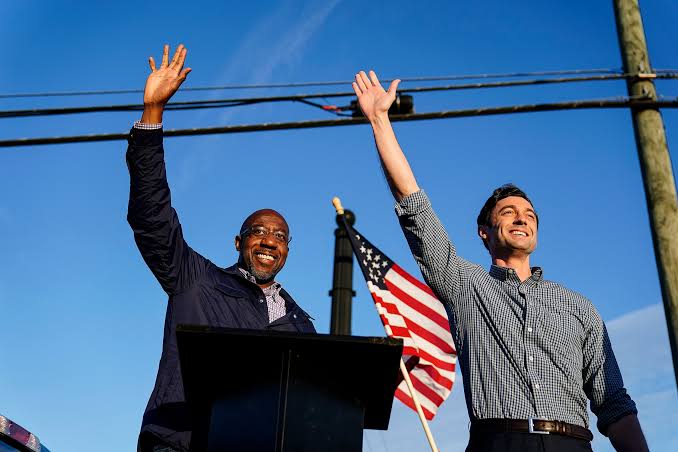
Jon Ossoff or Raphael Warnock out from the Senate in 2026?
Description
This event group asks whether either Jon Ossoff or Raphael Warnock (both U.S. Senators from Georgia) will formally cease to hold their Senate seat before the end of 2026. Resolution depends on formal departure through resignation, removal, expulsion, or other official means—not announcements of future departure or temporary leaves.
PredictionHero - Resolution Divergence Alerts (RDA)
Divergence Detected
Issue: Subject matter mismatch: Kalshi market references Ruben Gallego (Arizona), while Polymarket references Jon Ossoff and Raphael Warnock (Georgia). These are distinct individuals and states, rendering the markets logically incompatible and unhedgeable against each other.Hero tip: Do not assume these markets are equivalent or correlated. Kalshi is tracking Arizona Senate dynamics; Polymarket is tracking Georgia Senate dynamics. Treat as separate markets with independent resolution paths. Verify contract IDs and underlying subjects before executing any trades.Critical divergence points:
- Kalshi: Tracks Ruben Gallego (Arizona Senator) departure before three tiered dates: Jun 1, 2026; Sep 1, 2026; or Nov 3, 2026. Resolves Yes if departure occurs before any of these dates. Key Quote: 'If Ruben Gallego leaves as Senator before [date], then the market resolves to Yes.'
- Polymarket: Tracks Jon Ossoff or Raphael Warnock (Georgia Senators) formal departure by December 31, 2026 at 11:59 PM ET. Excludes announcements and temporary leaves. Key Quote: 'This market will resolve as Yes if either Jon Ossoff or Raphael Warnock formally ceases to hold the position of United States Senator by December 31, 2026 at 11:59 PM ET.'
Polymarket
This market will resolve as Yes if either Jon Ossoff or Raphael Warnock formally ceases to hold the position of United States Senator by December 31, 2026 at 11:59 PM ET. Otherwise, this market will resolve as "No." Jon Ossoff or Raphael Warnock must formally cease to hold the specified position in accordance with the laws, rules, or procedures applicable to that position. Announcements of a future departure do not qualify. The means of departure do not impact settlement; resignation, removal, expulsion, or other means all qualify. Temporary leaves of absence, dated suspensions, indefinite suspensions, administrative leaves, or other temporary changes to the specified person’s duties in the specified position do not qualify. The resolution source for this market will be statements from Jon Ossoff, Raphael Warnock, the offices of Jon Ossoff or Raphael Warnock, and the United States Senate.
Kalshi
Ruben Gallego's departure from his Senate seat is evaluated across multiple time windows spanning from June 2026 through January 2027. A departure occurs when Gallego permanently ceases to hold the role through any means—including resignation, retirement, removal, expulsion, recall, or natural expiration of term—whether voluntary or involuntary. Temporary leaves of absence, suspensions, or recusals do not constitute departure. If Gallego vacates and later re-occupies the role, resolution occurs at the initial vacation. Death while in office may result in resolution at the Exchange's discretion using the last fair price. If the Senate seat itself ceases to exist with no plausible successor, the market resolves to No. Each time window operates independently: if departure occurs before any specified deadline, that market resolves to Yes.
Frequently asked questions
Prediction markets and traditional polls measure different things: polls capture voter sentiment at a single moment, while markets aggregate forward-looking bets from traders with financial skin in the game. Market participants often incorporate polling data, but they also factor in fundraising, endorsements, candidate momentum, and historical turnout patterns. This market's odds reflect traders' collective assessment of the probability that either senator exits before year-end, which may diverge from generic approval ratings or head-to-head matchups. Markets tend to update faster than polls when breaking news occurs, making them a useful real-time barometer alongside conventional survey data.
Polymarket currently favors Jon Ossoff or Raphael Warnock out from the Senate in 2026? at 4.5%, while Kalshi leans toward Will Ruben Gallego be out as Senator before Nov 3, 2026? at 6.0%. Polymarket and Kalshi can show different implied probabilities for the same outcome because of liquidity, fee structure, participant mix, and how each venue defines the contract. Price differences between venues typically stem from variations in user base composition, liquidity depth, fee structures, and the timing of large trades. One platform may attract more politically engaged traders or institutional activity, shifting the consensus. Additionally, each venue's rules and dispute-resolution processes can influence how traders price tail risks. Arbitrage opportunities between the two platforms create incentives for sophisticated traders to exploit gaps, though transaction costs and withdrawal delays often prevent complete convergence.
This market resolves around Jan 8, 2027, with the outcome confirmed once the event is verifiable from credible public reporting. The resolution hinges on whether either Jon Ossoff or Raphael Warnock leaves the Senate before that date through resignation, death, removal, or other departure. Traders will know the outcome based on official Senate records and mainstream news coverage. Until resolution, the market remains open for trading, allowing participants to adjust positions as new information emerges. The exact mechanics of how each platform finalizes the outcome may vary slightly, but both track the same underlying event.
Major catalysts include health crises, scandal or legal trouble affecting either senator, shifts in party leadership or committee assignments, and unexpected resignation announcements. Electoral dynamics—such as primary challenges, redistricting effects, or national political realignment—can also influence trader expectations about their Senate tenure. Fundraising reports, endorsement patterns, and legislative voting records may signal strength or vulnerability. Media coverage of retirement speculation or succession planning in Georgia politics could trigger sharp price moves. Additionally, broader macroeconomic or geopolitical events that reshape the political landscape might indirectly affect assessments of whether either senator chooses to step down before 2026.
%20scale(0.82)%20translate(-12.5%20-12.5)'%3e%3cpath%20fill='%23000'%20fill-rule='evenodd'%20d='M9.619%2012.69h12.995a1.382%201.382%200%200%200%200-2.76h-3.932l5.298-5.405.032-.032L22.08%202.56h-5.255V1.38c0-.76-.619-1.38-1.38-1.38H9.81c-.76%200-1.38.62-1.38%201.38V11.5c0%20.657.534%201.19%201.19%201.19m12.995-2.186h-5.3l5.89-6.01-1.139-1.139-5.813%205.933V1.38a.806.806%200%200%200-.805-.806.806.806%200%200%200-.805.806v9.545c0%20.656.533%201.19%201.189%201.19h6.783a.806.806%200%200%200%200-1.612'%20clip-rule='evenodd'/%3e%3cpath%20fill='%23000'%20fill-rule='evenodd'%20d='M14.393%2011.31H1.398a1.382%201.382%200%200%200%200%202.76H5.33L.032%2019.476%200%2019.507l1.931%201.933h5.255v1.18c0%20.76.619%201.38%201.379%201.38h5.638c.76%200%201.38-.62%201.38-1.38V12.5c0-.657-.534-1.19-1.19-1.19m.293%2011.31a.8.8%200%200%201-.788.805.797.797%200%200%201-.787-.805v-7.904l-5.69%205.928-1.113-1.139%205.764-6.005H6.884a.797.797%200%200%201-.787-.806c0-.444.353-.806.787-.806h6.638c.642%200%201.164.534%201.164%201.19z'%20clip-rule='evenodd'/%3e%3c/g%3e%3c/svg%3e)